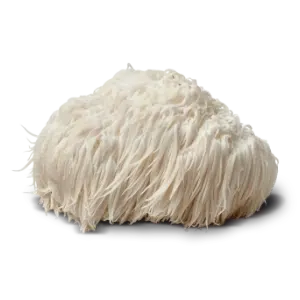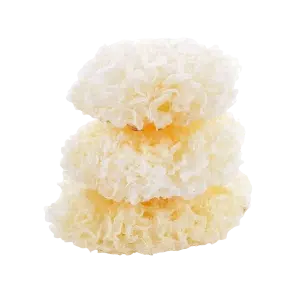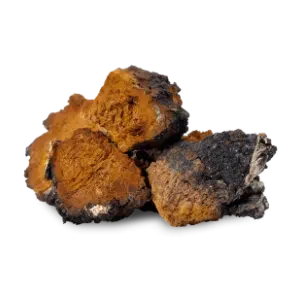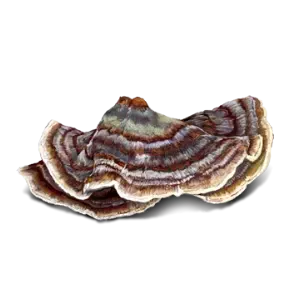

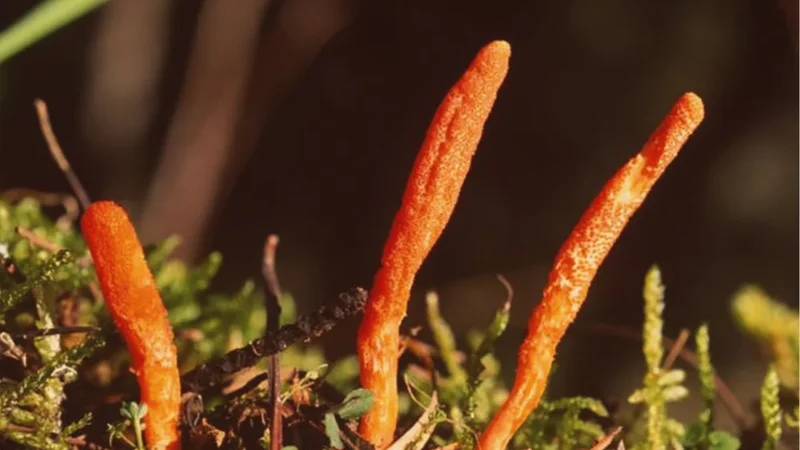
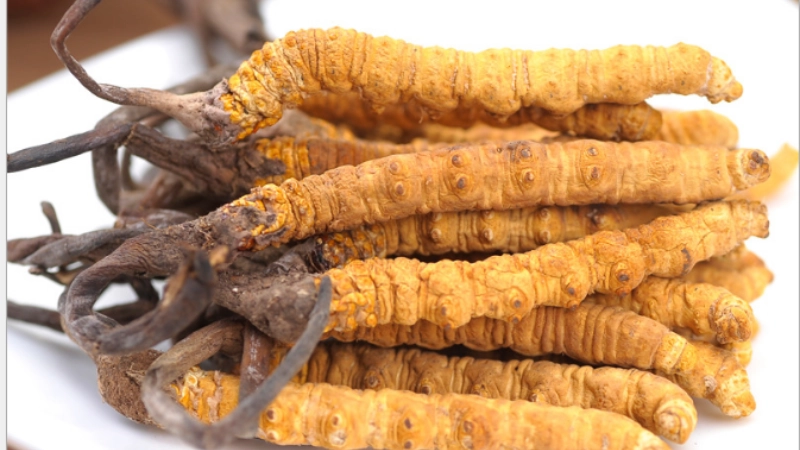
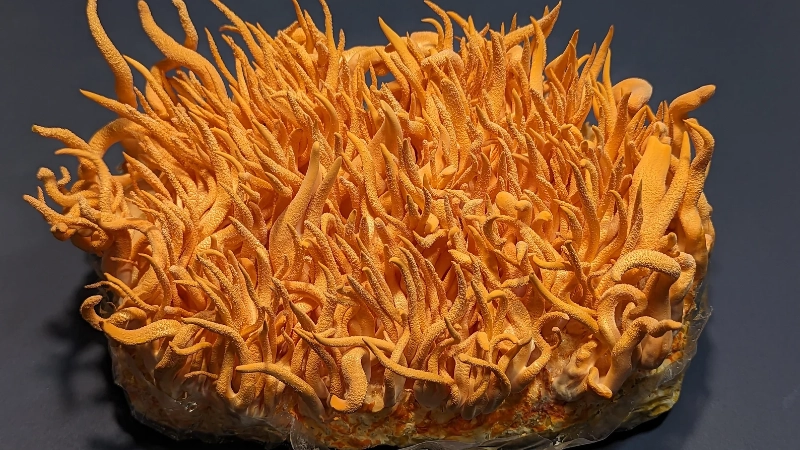
Images of Cordyceps Mushrooms
History of Cordyceps Mushroom
Eastern Perspective:
In the East, particularly in traditional Chinese and Tibetan medicine, Cordyceps has been revered for centuries. Its origins in Eastern medicine are deeply rooted in ancient texts and practices. The first recorded mention of Cordyceps dates back to the Tang Dynasty in the classic pharmacopeia "Ben Cao Cong Xin." However, its prominence surged during the Ming Dynasty when the physician Wu Yiluo detailed its properties and uses in his medical text.
The name "Dong Chong Xia Cao" (冬虫夏草), which translates to "winter worm, summer grass," aptly describes the fungus's lifecycle, where it parasitizes caterpillar larvae in the winter and sprouts as a fungus in the summer. In Tibet, it's known as "Yartsa Gunbu," and its collection has served as a significant source of income for rural Tibetan communities.
Beyond its medicinal use, Cordyceps has also played a role in spiritual and religious practices in Tibet. It was often considered a bridge between the living and the dead due to its unique lifecycle.
Western Perspective:
The West's introduction to Cordyceps was relatively recent compared to its long-standing history in the East. The fascination began primarily as tales of this "magical" fungus reached European explorers and traders. However, it wasn't until the 18th and 19th centuries that Western scientists and botanists began to study Cordyceps in earnest.
The "zombie-ant" phenomenon, where the fungus infects and takes over an ant, leading it to a suitable growth location before sprouting from its head, particularly intrigued Western mycologists. This unique parasitic relationship became a subject of numerous studies.
The global spotlight shone on Cordyceps after the 1993 Chinese National Games, where the Chinese women's track and field team broke multiple world records. Their coach attributed part of their success to a Cordyceps-based tonic, sparking interest in the West about its potential athletic performance-enhancing properties.
Today, with the rise of herbal and alternative medicine in the West, Cordyceps has found its place as a sought-after supplement, with many intrigued by its potential health benefits, leading to extensive scientific research and commercial cultivation outside its native regions.
Cordyceps in Medicine
In traditional Chinese and Tibetan medicine, Cordyceps has been used for centuries to address fatigue, sickness, kidney disease, and low sex drive. Its unique ability to balance both Yin and Yang in the body made it a sought-after remedy. Modern medicine has taken interest in Cordyceps for its potential anti-tumor, immunomodulatory, antioxidant, and pro-sexual effects, among others.
Health Benefits of Cordyceps Mushrooms
- Energy and Stamina: Increases ATP production, improving energy levels and endurance.
- Immune System Boost: Enhances the body's natural killer cell activity.
- Lung Health: Used to treat respiratory ailments and improve oxygen utilization.
- Anti-Aging: Contains antioxidants that combat free radical damage.
- Heart Health: May reduce bad LDL cholesterol levels.
- Blood Sugar Regulation: Shows potential in maintaining optimal blood sugar levels.
- Libido: Traditionally used to enhance libido and combat reproductive issues.
People Also Asked. Fun Facts about Cordyceps
- Cordyceps is known as the "zombie-ant fungus" due to its parasitic nature on ants, leading to sprouting from the host's head.
- The 1993 Chinese National Games saw record-breaking performances from athletes who attributed part of their success to a Cordyceps-based tonic.
- Cordyceps sinensis, one of the most prized species, grows naturally at high altitudes in the Himalayas.
Cordyceps Recipes or Usage in Cuisine
Cordyceps can be consumed in various forms. It's often boiled with chicken or duck to make nutritious soups in Chinese cuisine. Additionally, it can be ground into powder and added to tea or coffee. Cordyceps tinctures and capsules are also popular for those who prefer a more direct approach to consumption.
Medical Studies with Cordyceps - Includes Links
Cordyceps sinensis and its fractions stimulate MA-10 mouse Leydig tumor cell steroidogenesis.
- Authors: Hsu CC, Huang YL, Tsai SJ, Sheu CC, Huang BM.
- Publication Year: 2003
- Abstract: This study delves into the effects of Cordyceps sinensis on steroidogenesis in MA-10 mouse Leydig tumor cells. The research found that Cordyceps sinensis and its fractions can stimulate steroidogenesis in these cells.
- Link to the paper
Cordyceps sinensis increases hypoxia tolerance by inducing heme oxygenase-1 and metallothionein via Nrf2 activation in human lung epithelial cells.
- Authors: Lee JS, Hong EK.
- Publication Year: 2012
- Abstract: This research investigates how Cordyceps sinensis can enhance hypoxia tolerance in human lung epithelial cells. The study found that Cordyceps sinensis induces heme oxygenase-1 and metallothionein via Nrf2 activation, which plays a role in increasing hypoxia tolerance.
- Link to the paper
Cordyceps sinensis mycelium activates PKA and PKC signal pathways to stimulate steroidogenesis in MA-10 mouse Leydig tumor cells.
- Authors: Hsu CC, Tsai SJ, Huang YL, Huang BM.
- Publication Year: 2005
- Abstract: This paper explores the mechanisms by which Cordyceps sinensis mycelium stimulates steroidogenesis in MA-10 mouse Leydig tumor cells. The findings suggest that Cordyceps sinensis mycelium activates PKA and PKC signal pathways, leading to increased steroidogenesis.
- Link to the paper
Cordyceps – A traditional Chinese medicine and another fungal therapeutic biofactory?
- Publication Year: 2008
- Author: R. Russell M. Paterson
- Abstract: This paper discusses Cordyceps as a Traditional Chinese Medicine (TCM) and its potential therapeutic properties. The study evaluates the effectiveness of Cordyceps and its bioactivity. The research also touches upon the pharmacological data related to apoptosis and the potential of Cordyceps in treating cancers and diabetes.
- Link to the study